
Infrastructure that lives where you do
The infrastructure work we have done for 25 years. IT infrastructure, focused, and an option — supported by our own team or augmented current staff / current service provider.
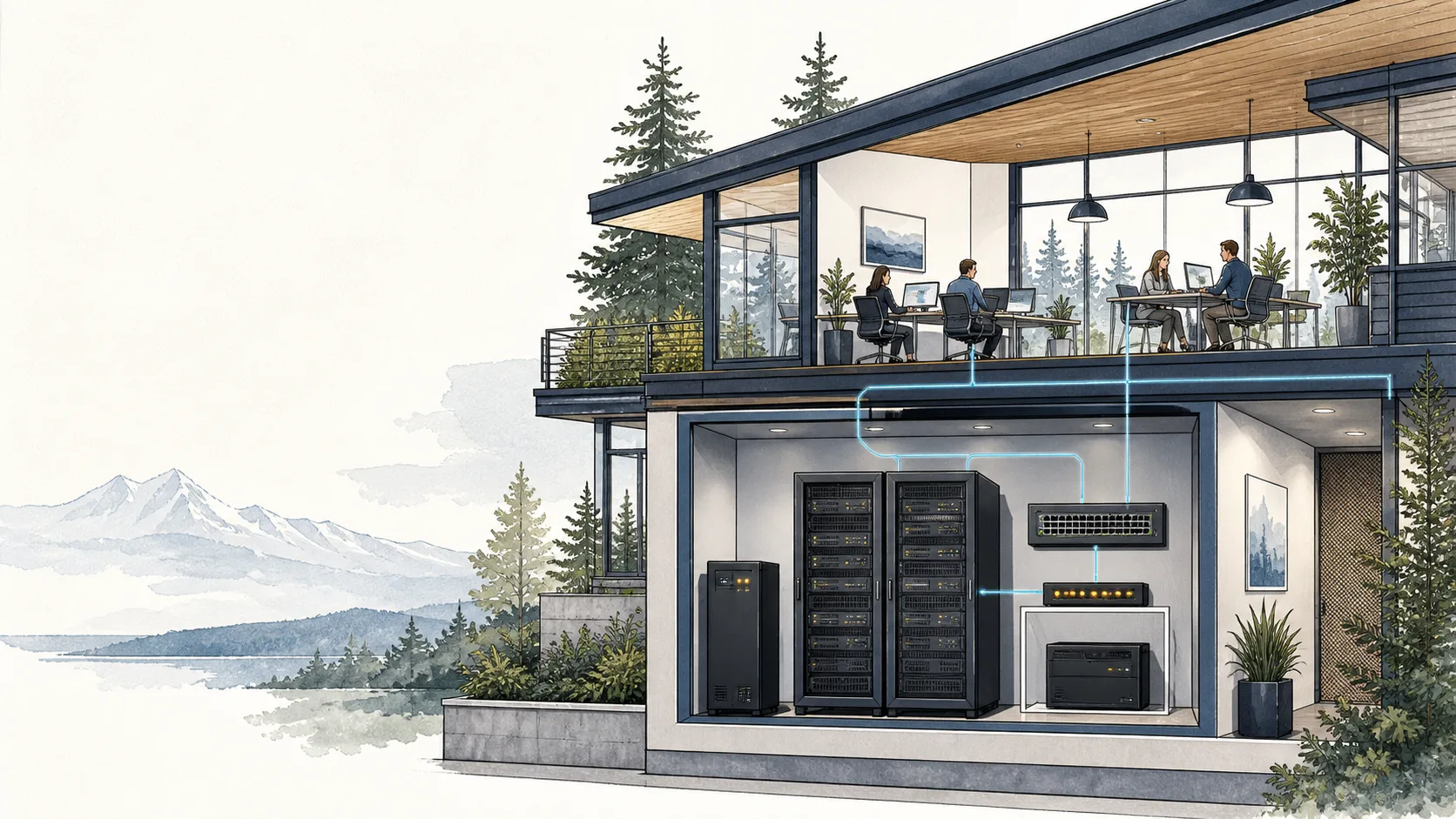
The cloud is an option—not the only option
For stable workloads, sensitive information, and operations that cannot stop when an internet provider or regional cloud service has trouble, on-premises infrastructure remains a practical, modern choice.
Cascade designs secure, right-sized on-premises and hybrid environments using new or enterprise-grade refurbished hardware—giving you control without unnecessary enterprise expense.
A smaller, more controlled attack surface
On-premises does not automatically mean secure. But a properly designed local environment can reduce publicly exposed services, eliminate unnecessary third-party dependencies, and create clear boundaries around critical systems.
Firewalls, network segmentation, multifactor authentication, encryption, monitoring, and tested backups work together to limit both the likelihood and potential impact of an intrusion.
Keep your data—and your intellectual property—close
When systems run locally, sensitive information remains under policies and access controls you manage. Fewer outside providers handle your files, operational data, customer records, telemetry, and internal knowledge.
That creates clearer data custody and reduces the risk of confidential information being retained, analyzed, or submitted to an outside AI service without appropriate oversight.
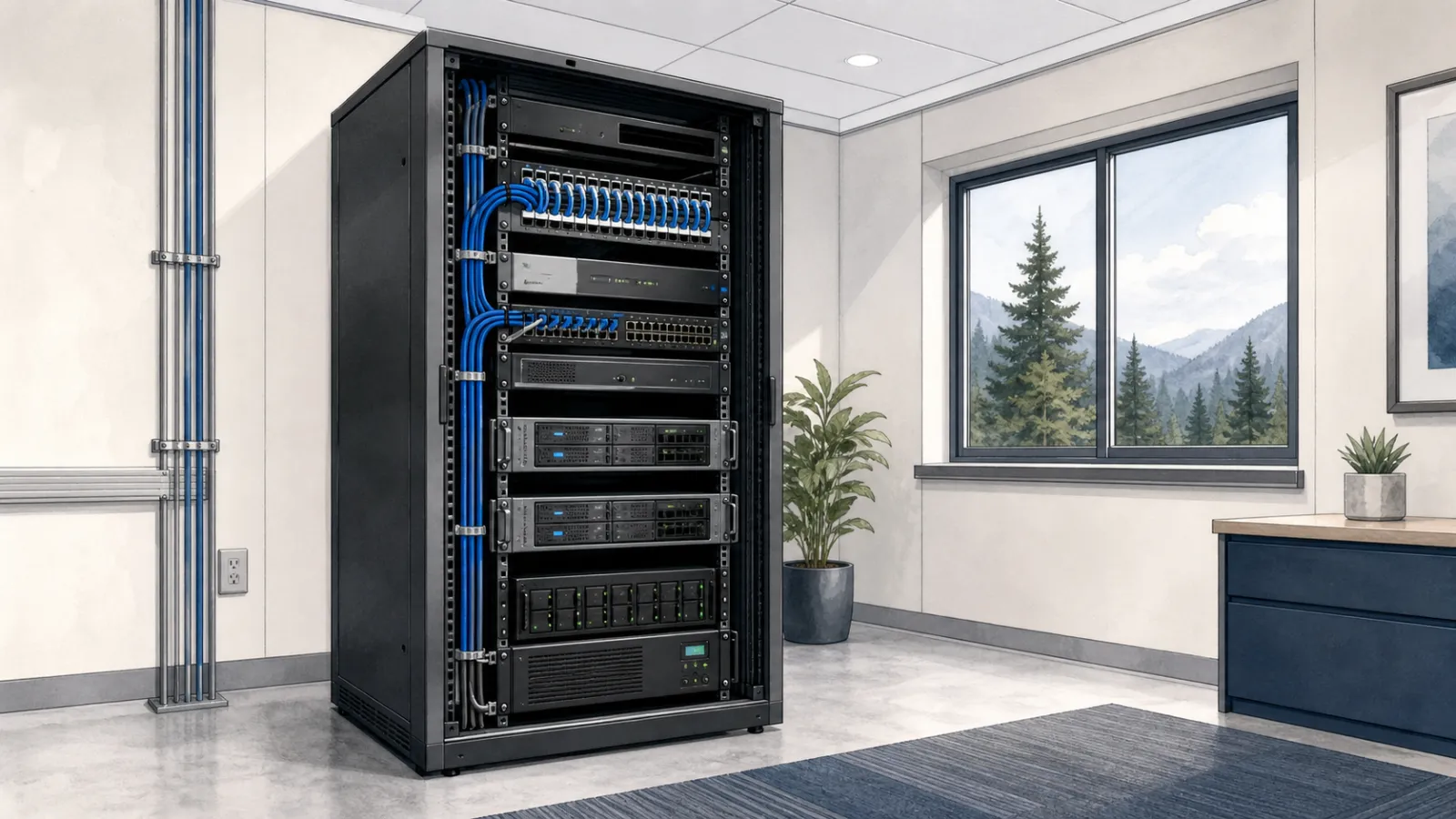
Predictable economics over three to five years
Cloud services are excellent for rapidly changing or temporary workloads. For systems that run continuously, however, monthly infrastructure charges never stop.
Owning right-sized equipment converts much of that recurring expense into a predictable investment. Modern servers can often remain productive for five to seven years, while virtualization allows several workloads to share the same hardware.
Enterprise-grade refurbished servers, switches, and firewalls can reduce the initial investment even further—especially when equipment is carefully selected, tested, updated, and backed by available replacement parts.
Keep working when the internet does not
Local file services, authentication, databases, business applications, production systems, and private AI can continue operating across your internal network even when an internet circuit, cloud region, DNS provider, or upstream route is unavailable.
A thoughtfully designed environment can combine local availability with redundant internet circuits, off-site backups, and cloud-based disaster recovery where those services add genuine value.
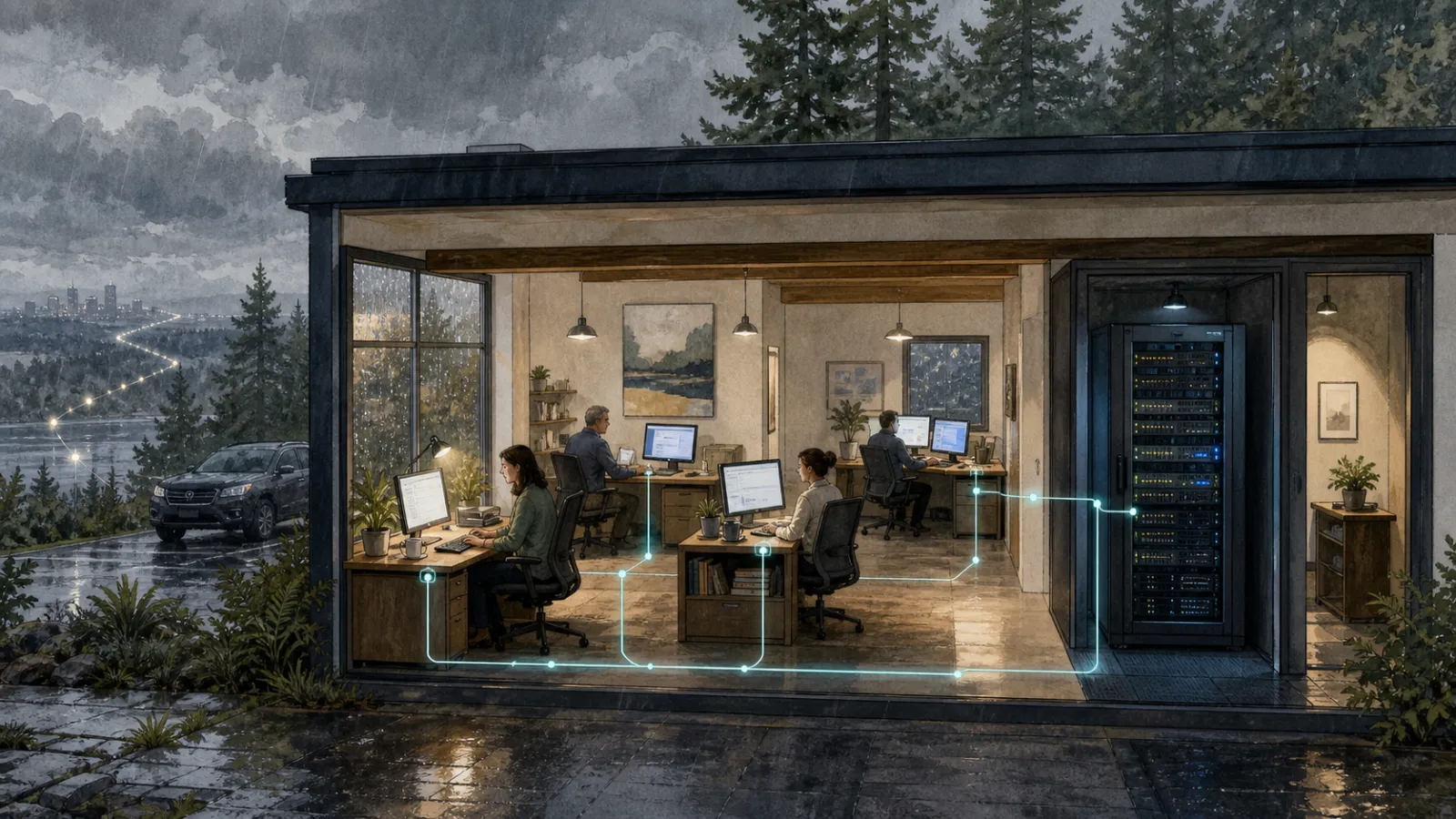
Make compliance boundaries easier to understand
Frameworks such as NIST SP 800-171, CMMC, HIPAA, and PCI DSS are technology-neutral; simply owning the hardware does not create compliance.
On-premises architecture can, however, make the system boundary easier to define and document. Sensitive workloads can be placed in dedicated network segments with tightly controlled access, logging, encryption, and retention policies. This can reduce assessment scope and make security controls easier to demonstrate and maintain.
Hybrid where it makes sense
The best answer is often not “cloud or on-premises.” It is deciding where each workload belongs.
Keep sensitive data, stable applications, local AI, and operationally critical services close. Use cloud services for collaboration, temporary capacity, off-site recovery, or applications where the provider offers a clear operational advantage.
Five-year cost comparison
| Five-year example | On-premises | Cloud equivalent |
|---|---|---|
| Two refurbished virtualization servers, firewall, switch, UPS, backup storage, licensing and deployment | $28,000 upfront | — |
| Power, warranty, backup and hardware allowance | $400/month | — |
| Comparable hosted compute, storage, backup and networking | — | $1,400/month |
| Estimated five-year cost | $52,000 | $84,000 |
| Illustrative savings | $32,000 (38%) | |
Illustrative only. Actual comparisons should include workload utilization, licensing, support, bandwidth, backup, power, growth, and disaster-recovery requirements.
37signals reported moving seven applications from AWS to owned hardware and projected savings exceeding $10 million over five years; it expects the hardware to serve for five to seven years. 37signals cloud-exit results
This isn't a fringe position. Basecamp — a software company of about 80 people — pulled its products off Amazon's cloud and onto its own hardware in 2023, cutting infrastructure costs by half to two-thirds without hiring anyone, and expects to save roughly $10 million over five years. Industry surveys show the same shift: the large majority of IT leaders now plan to move at least some workloads out of the public cloud and back onto infrastructure they control.
NIST SP 800-171 explicitly addresses system boundaries, managed interfaces, boundary protection, and physically or logically separated subnetworks. NIST SP 800-171 Rev. 3
PCI guidance says effective segmentation can reduce assessment scope, cost, implementation difficulty, and risk. PCI segmentation guidance
HHS confirms that cloud providers handling ePHI become business associates and require appropriate agreements and safeguards. HHS cloud-computing guidance
Own the foundation. Use the cloud selectively. Keep control of what matters most.
Talk with Cascade about your infrastructure →